Chapter Nine
Calcutta, Peshawar, Karachi
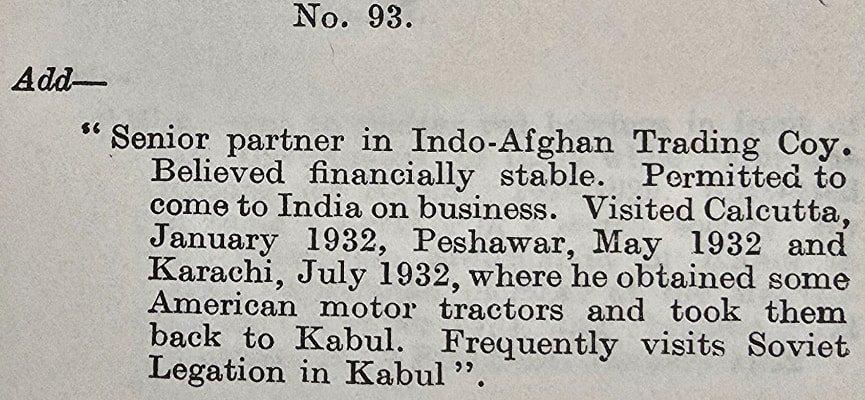
By 1932 he was senior partner in the Indo-Afghan Trading Company, “believed financially stable”, and allowed into India on business. A printed amendment to his file tracks the year like a ship’s log.
The commercial capital of the east, its river crowded with ships. The records say that he arranged with New Theatres, Calcutta’s new film studio, to supply films for Kabul’s cinemas, though not whether it began on this visit. By the time the directory was printed, the screens of Kabul had lit up again, and some of what played on them had come from Calcutta.Record Entry 148 (undated).
Step aside 1 minNew TheatresThe Calcutta studio, barely a year old, whose films travelled to Kabul.
In a Calcutta suburb called Tollygunge, a young engineer named B. N. Sircar opened a film studio on 10 February 1931 and called it New Theatres. Within a few years it was one of the great studios of India, making films in Bengali, Hindi and Urdu as the talkies arrived.History Wikipedia.
The city of his college. He could come and go on business.
His brother could not. Abdul Wahid asked to go home in 1924. He asked again in 1926, and again in 1933. He was refused every time.Record Entry 129.
Step aside 1 minThe Street of StorytellersWhat happened in Peshawar's Qissa Khwani Bazaar two years before he came.
In April 1930 British troops fired on unarmed crowds in Peshawar’s Qissa Khwani Bazaar, the Street of Storytellers. The crowds had gathered to protest the arrest of Abdul Ghaffar Khan, founder of the non-violent Khudai Khidmatgar, who came from Utmanzai, in the same Charsadda country as Amba Dher.History On the Qissa Khwani massacre of 23 April 1930: Wikipedia.
The port where the machinery bound for Afghanistan came ashore. There, says the amendment, he “obtained some American motor tractors and took them back to Kabul”. It does not say when he got home, or by which road.