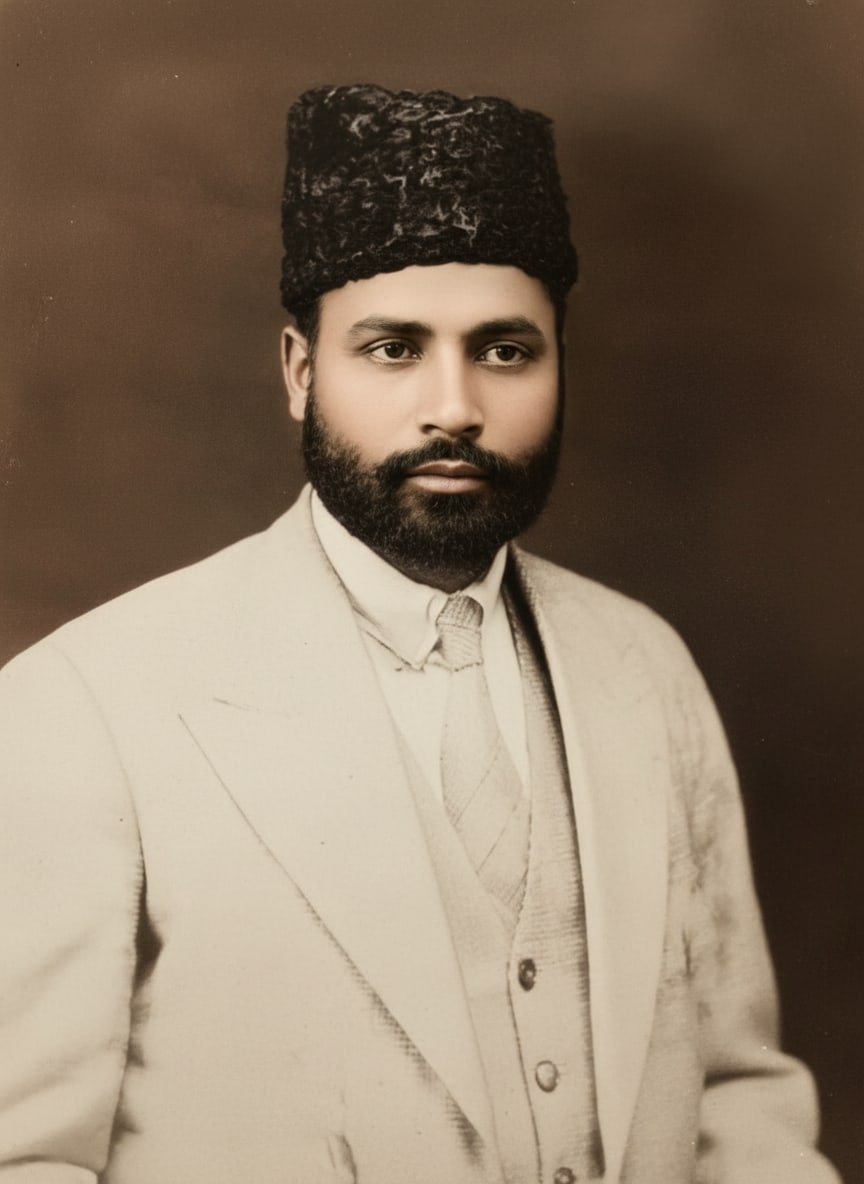
A family archive
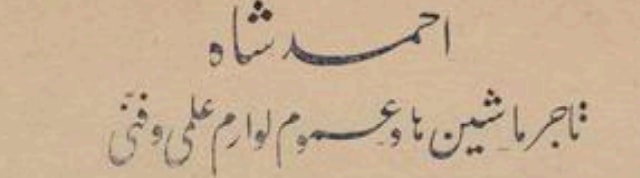
Ahmed Shah
احمد شاه
Amba Dher, 1900 – Lahore, 1983
At twelve, orphaned, he became the head of his household.The orphan became, according to the British, “one of the biggest business men in Kabul”.His journeys took him from Kabul to Calcutta, Bombay, Karachi, Lahore and London, and twice to Mecca.Through it all, he was a man of Tahajjud, the night prayer.
Ten minutes? Start with six moments.
A first visit · about ten minutes
Six moments
- 1TwelveThe one date his family never lost.
- 2A choice offered by a kingLand, or money? The king let him choose.
- 3AloneA warning came. He left through the mountains, alone.
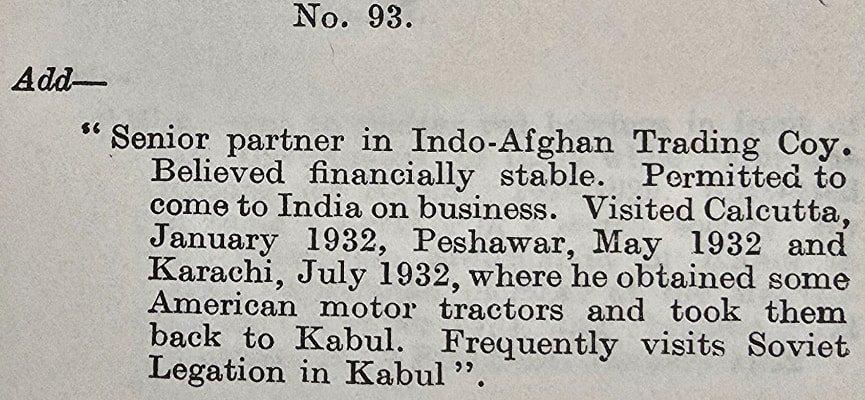
- 4His name above the telephonesTelephones from Stockholm, tractors from America, and his name above them.
- 5The telegram1940. The radios stop coming. His firm does not wait.
- 6The kingdom of midnightWhat no archive could keep.
The first clue · Amba Dher
Two brothers leave for Afghanistan
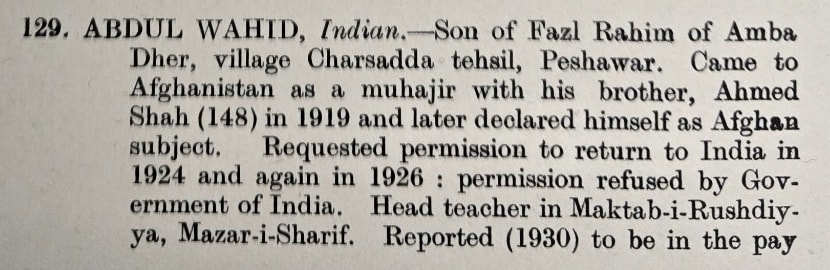
A British directory of 1940 has a line about a man called Abdul Wahid, from Amba Dher. Read who came with him.
In plain English
Abdul Wahid, son of Fazl Rahim of Amba Dher, came to Afghanistan in 1919 as a muhajir, an emigrant for reasons of faith, together with his brother Ahmed Shah. The number 148 points to AhmedShah’s own entry later in the book.
A directory compiled in March 1940 places two brothers from Amba Dher in Afghanistan in 1919. One was Abdul Wahid. The other was Ahmed Shah.
Meet a person. Find a clue. See where it leads. Every story here opens on the photograph or document it comes from, so you can read it for yourself.
وَمِنَ اللَّيْلِ فَتَهَجَّدْ بِهِ نَافِلَةً لَكَ“And in part of the night, rise from sleep to pray, an extra offering of your own.” Al-Isra 17:79, the verse that names Tahajjud; plain-English rendering.
His faith · as his family remembers
The kingdom of midnight
The records follow him through agencies and contracts. His family remembers something else first: that from the age of eighteen, he rose every night to pray.
Read the verse he lovedIn this exhibition
Five rooms
Begin with his story and walk through in order, or step into whichever room calls to you. Each room ends by pointing to the next.
- 01BiographyWho was he? His life in a prologue and thirteen short chapters.
- 02JourneyWhere did he go? Follow him on an illustrated map, from Amba Dher to Lahore.
- 03BusinessesWhat did he build? Telephones, tractors, films and radios, told through surviving objects.
- 04Family TreeWhere are you in his family? Find a relative, or add someone who is missing.
- 05ArchiveHow do we know? Every photograph, letter, advertisement and directory page.