Prologue
Two words
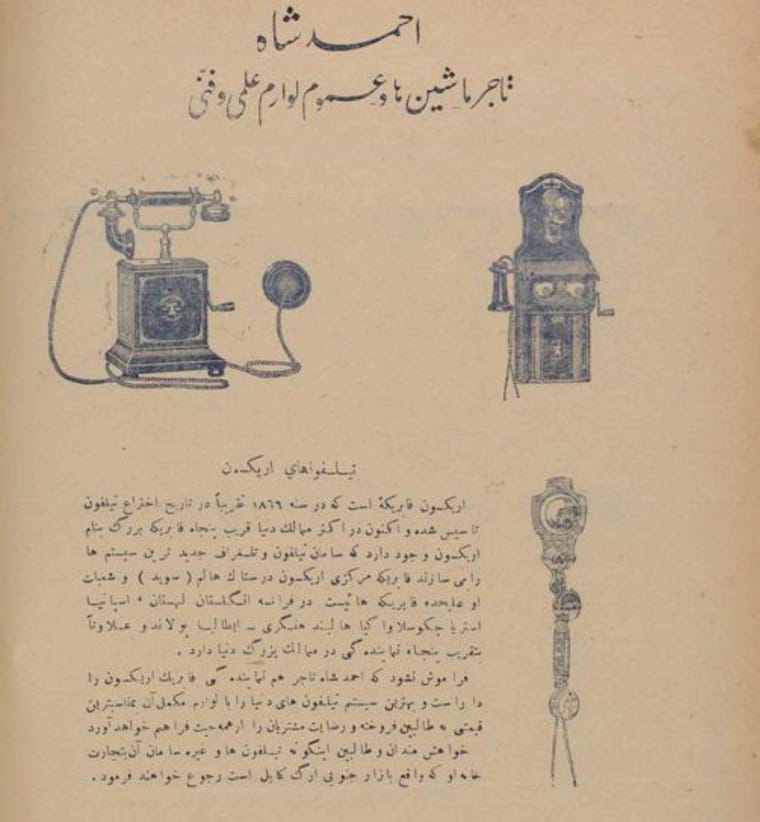
On a page of a Kabul newspaper, some time around 1931, three telephones are drawn in fine black lines. One stands on a desk, its cord falling away in a long, lazy loop. One hangs on a wall. The third is a handset, drawn upright, waiting to be lifted. Above them, in Persian letters large enough for a child to pick out, are two words.
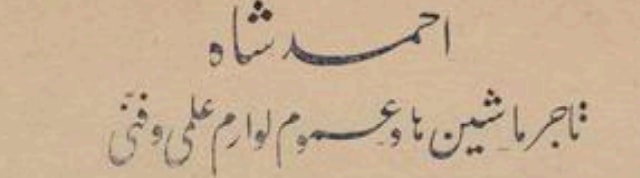
احمد شاه
Ahmed Shah. Below his name, smaller: merchant in machines and all kinds of scientific and technical equipment. At the foot of the page, an address in the bazaar beneath the royal citadel of Kabul.Record Advertisement in the newspaper Anis, Kabul, about April 1931.
A century later, a great-grandchild who cannot read Persian can still find those two words on that page and know them for what they are.
How he came to be there is the story of a boy from a village on the plain of Peshawar, and of a king who tried to remake his country in a decade.
It is also the story of a great many journeys. All but one of them were made for the sake of someone else.