Chapter Thirteen
The kingdom of midnight
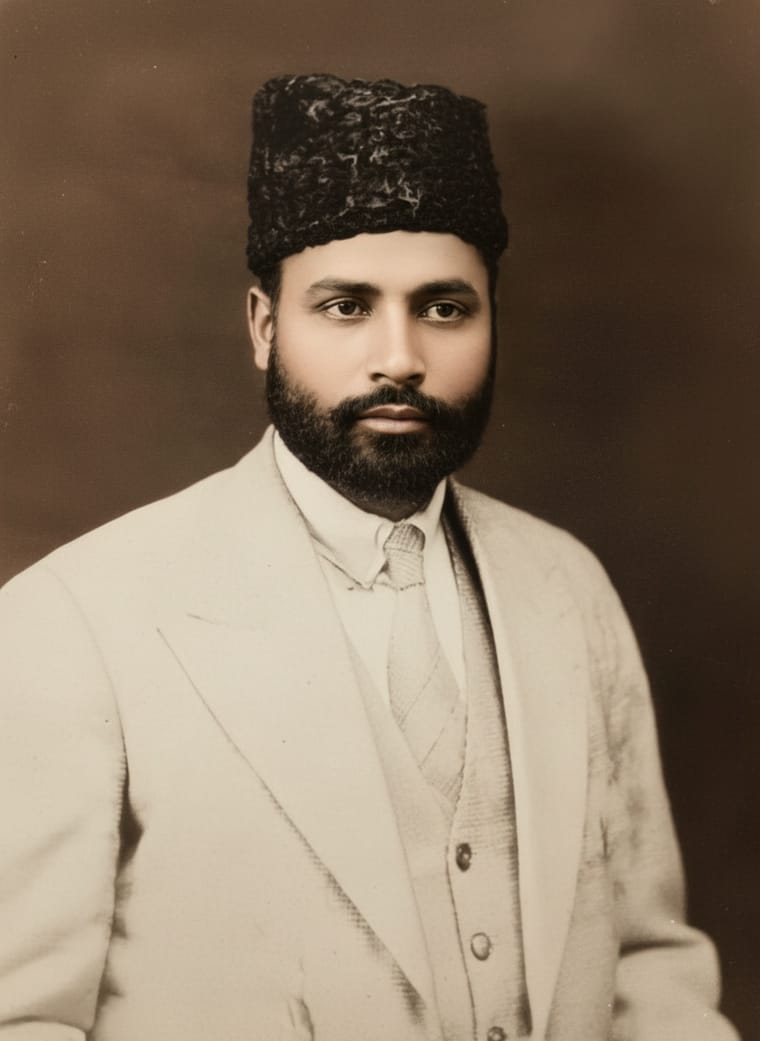
In 1962 he moved to Lahore, the city of his third marriage. Some twenty years earlier he had married a lady from a family near Bhatti Gate, in the old walled city, and they had eight children: six sons and two daughters.Family memory The move to Lahore, his third marriage and their eight children are family memory.
To his children and grandchildren he was Agha Jan, and to the family he still is.
Behind the businessman was what his family most wants remembered: his faith.
He held the whole Quran in his memory, yet he never called himself a hafiz, the title given to those who do. His family remembers his love for the Quran, and for the Prophet Muhammad ﷺ.Family memory His memorisation of the Quran, his never claiming to be a hafiz, and his love for the Quran and the Prophet ﷺ are the family’s account.
Every night, from the age of eighteen until the end, he rose for Tahajjud. Of everything his family might have carried forward from him, they kept a Persian verse he loved about that hour.
He died in Lahore in 1983, at the hour of Tahajjud, just before the call to the dawn prayer.
The hour he had spent with his Lord every night since he was eighteen was the hour in which his Lord called him home.Family memory That he died at the time of Tahajjud, just before the call to Fajr, is the family’s account.
The telephones, the tractors, the cinema, the letters to London all left traces that a stranger with patience might find in an archive. The verse is different. No archive holds it. It took someone who knew him to remember the words he loved when the business of the day was over, the house was quiet, and it was time to rise.
Do you remember Agha Jan?
A memory, a saying, a photograph, something he owned: we would be glad to hear it.